
Dr. Martin Luther King Jr.: A Voice of Hope. A Man Whose Voice Mattered
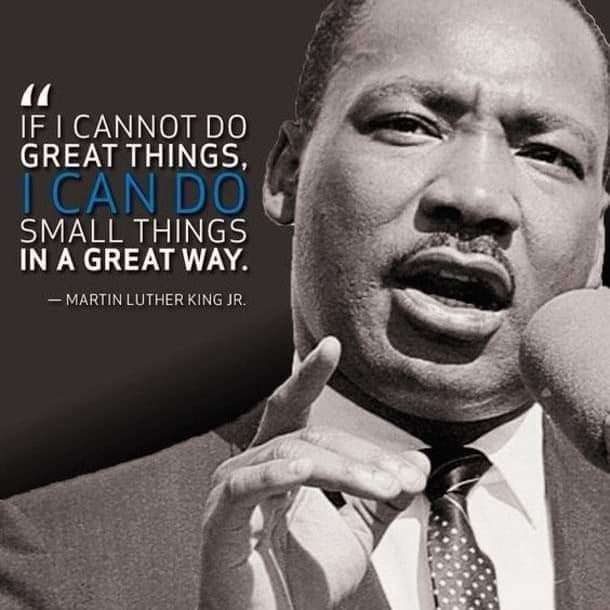
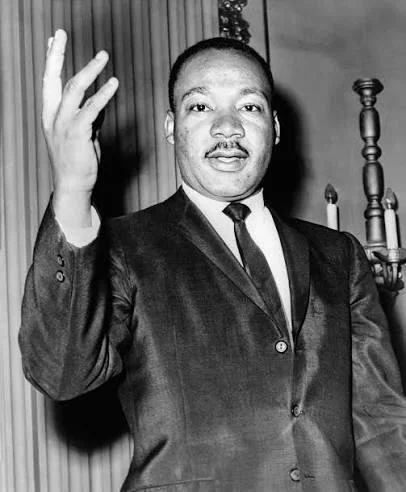
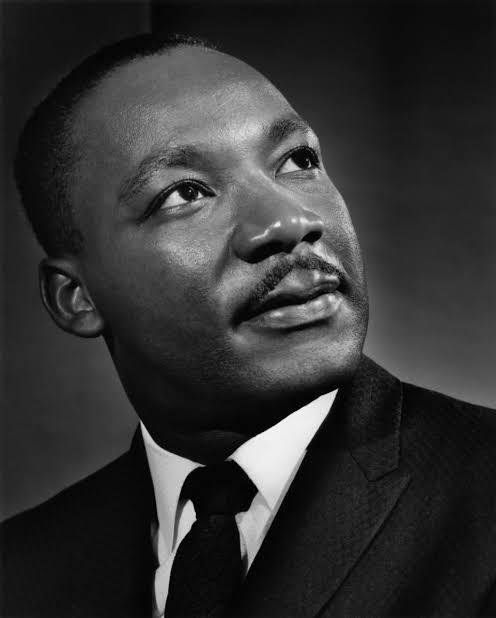
Dr. Martin Luther King Jr.
He was a man who had a word for every situation and event. A man who could quote without blinking. Well, history didn’t blink writing his story either. A reflection from this powerful quote coming from him is why Impact Sierra Leone (ISL) has been in existence since 2019 —and you’re probably wondering who I’m talking about. That’s Dr. Martin Luther King Jr. Here’s one of his quotes that’s been on my heart:
“Everybody can be great…because anybody can serve. You don’t have to have a college degree to serve. You don’t have to make your subject and verb agree to serve. You only need a heart full of grace. A soul generated by love.”
Let me share what’s been stirring in me.
Dr. Martin Luther King Jr. didn’t just fight for his people to live—he fought for us to thrive. There’s a profound difference between existence and flourishing, between surviving and living in freedom. Dr. King understood this distinction with a clarity that transcended his era. He Saw What Others Couldn’t. While many could identify the problems of segregation and injustice, Dr. King possessed a rare ability to envision the solution. He saw freedom where others saw only oppression. He saw power in nonviolence when others saw only weakness. His vision extended beyond the immediate battles to a future where his children would “not be judged by the color of their skin but by the content of their character.
He Chose Strategic Courage Over Reckless Bravery. History often confuses courage with fearlessness, but Dr. King’s courage was more nuanced and, ultimately, more effective. He wasn’t reckless—he was strategic. He understood that true leadership meant choosing the right battles, the right moments, and the right methods. From the Montgomery Bus Boycott to the March on Washington, he maximized every opportunity with precision and purpose. His courage lay not in the absence of fear, but in his ability to act despite it, and to do so with wisdom.
Dr. King ensured that history wouldn’t just be recorded in dusty textbooks—he made us witnesses to transformation. His “I Have a Dream” speech remains one of the most quoted addresses in American history. His “Letter from Birmingham Jail” is studied in universities worldwide as a masterpiece of moral argument and rhetorical power.
The physical monuments stand as well: the Martin Luther King Jr. Memorial in Washington, D.C., where his words are literally carved in stone; the National Civil Rights Museum at the Lorraine Motel in Memphis, where he made his final sacrifice; and countless streets, schools, and centers bearing his name across the nation. They move from just tributes to constant reminders that one man’s vision can reshape a nation’s conscience.
From Vision to Action: Impact Sierra Leone (ISL) continues the Work. Dr. King’s dream wasn’t confined to American soil—it was a vision for human dignity everywhere. This is why our organization, Impact Sierra Leone, bears his torch forward today. Going back to the roots in Africa, in Sierra Leone, we’re helping underserved populations not just survive, but thrive—through agricultural empowerment, education, and waste management programs.
Just as Dr. King saw freedom and power where others saw only obstacles, we see potential and prosperity where others might see only poverty. Our annual Christmas Day of Hope event in Foindu Village, Sierra Leone, during the festive season reminds us that thriving isn’t a privilege, it’s a right Dr. King fought for, and it’s a reality we must build together, community by community.
Dr. King’s victory wasn’t just for his generation—it was for ours. We don’t just live because he lived; we have the opportunity to thrive because he refused to accept anything less than freedom. The question he leaves us with is simple but challenging: What are we doing with the freedom he helped secure? Are we merely existing, or are we thriving? Are we seeing possibilities others miss? Are we maximizing our opportunities to build a more just world?
His legacy isn’t just something to commemorate—it’s something to continue, whether on the streets of America or in the communities of Sierra Leone.